
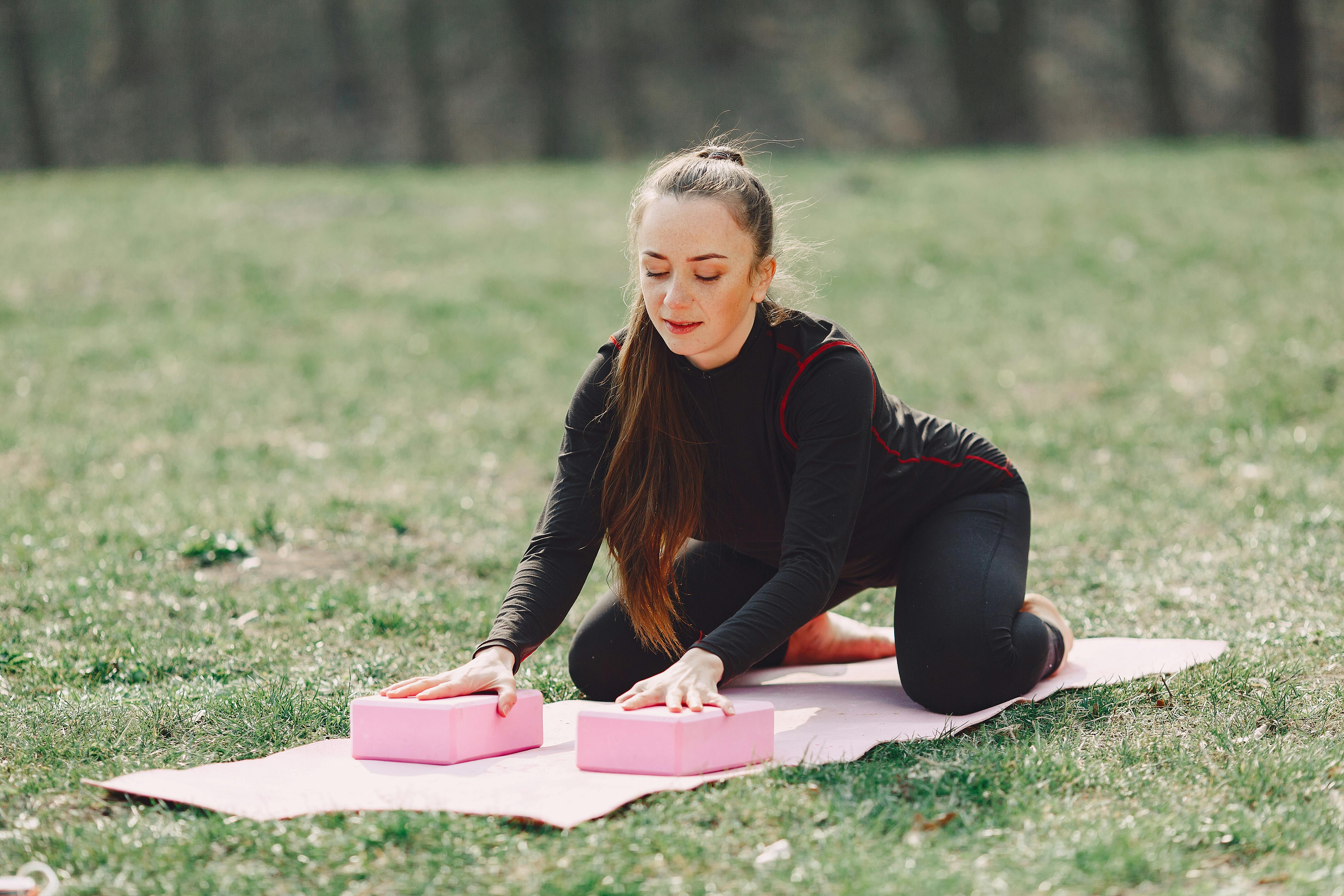
Many yoga teachers like to use yoga props in their classes, and one of the most common ones you’ll find is a foam block. Blocks, at their most basic function, serve to “bring the floor to you”. They help you reach down with more ease, which can allow you to learn new yoga poses more safely or go into poses you already know in new ways.
If yoga blocks are available to you in a yoga studio in Alexandria or wherever you practice yoga, it might be helpful to grab one or two to have on-hand in case you’d like to use them. The following are some yoga block basics and how to use yoga blocks in a practice.
What Are Yoga Blocks?

Yoga blocks are generally rectangular in shape and made of a lightweight material that makes them easy to move around. There are some yoga blocks that are made out of actual hard wood or bamboo, but the most common ones I encounter are made of foam or softer cork.
If you’re shopping for a yoga block at a store, take time to touch and use the yoga block. Notice if it’s slippery or heavy. Make sure you’re comfortable with handling it.
I have started seeing curved yoga blocks used by one of my favorite Peloton yoga teachers, Chelsea Jackson Roberts. They allow you to grip the block in different ways, and I can see some people benefiting from this type of shape.
Ultimately, it’s up to you what firmness, material and dimensions your ideal yoga blocks have.
If you don’t own yoga blocks and want to try incorporating them into your practice in the meantime, you can use some sturdy hardcover books as a way to help you reach the floor and test out how you’d enjoy using blocks.
Ideas for Using Yoga Blocks in a Practice

At its simplest, a yoga block can be used whenever you want to lift the floor up to you. They can also be used to help you open up in different ways in various poses, as well as provide extra support on body parts like knees.
It’s also helpful to keep in mind blocks can be used even more ways because they can reach various heights, depending on the way you place them on the ground. You might find that you prefer using a block on its highest setting in one pose, for example, but prefer laying it down flat in another.
Consider these ways for how to use blocks in yoga in Alexandria, VA or wherever you practice.
How to Use Yoga Blocks to Help You Reach the Floor
- Place a block under your bottom hand in Triangle Pose (Trikonasana) or Revolved Triangle Pose (Parivrtta Trikonasana).
- Place a block under your bottom hand in Half Moon Pose (Ardha Chandrasana) or Revolved Half Moon Pose (Parivrtta Ardha Chandrasana).
- Place a block under your bottom hand in Extended Side Angle Pose (Utthita Parsvakonasana).
- Place blocks under both hands in Downward Facing Dog (Adho Mukha Svanasana) or under forearms or hands in Extended Puppy Dog Pose (Uttana Shishosana).
- Place a block under your hands in Standing Forward Fold (Uttanasana) or Wide Legged Forward Fold (Prasarita Padottanasana).
- Place a block under your bottom hand in a Runner’s Lunge Twist (Parivrtta Anjaneysana).
- Place blocks under your hands in Pyramid Pose (Parsvottanasana).
- Place a block or blocks under your forearms, hands or forehead in Lizard Pose (Utthan Pristhasana).
- Place a block or blocks under your hands, forearms or forehead in Pigeon Pose (Eka Pada Rajakapotasana).
- Hold onto blocks in both hands in Half Splits (Ardha Hanumanasana).
- Place blocks under hands in Seated Forward Fold (Paschimottanasana).
- Place blocks flat under your hands in High Plank (Phalakasana).
How to Use Yoga Blocks to Support You in Poses
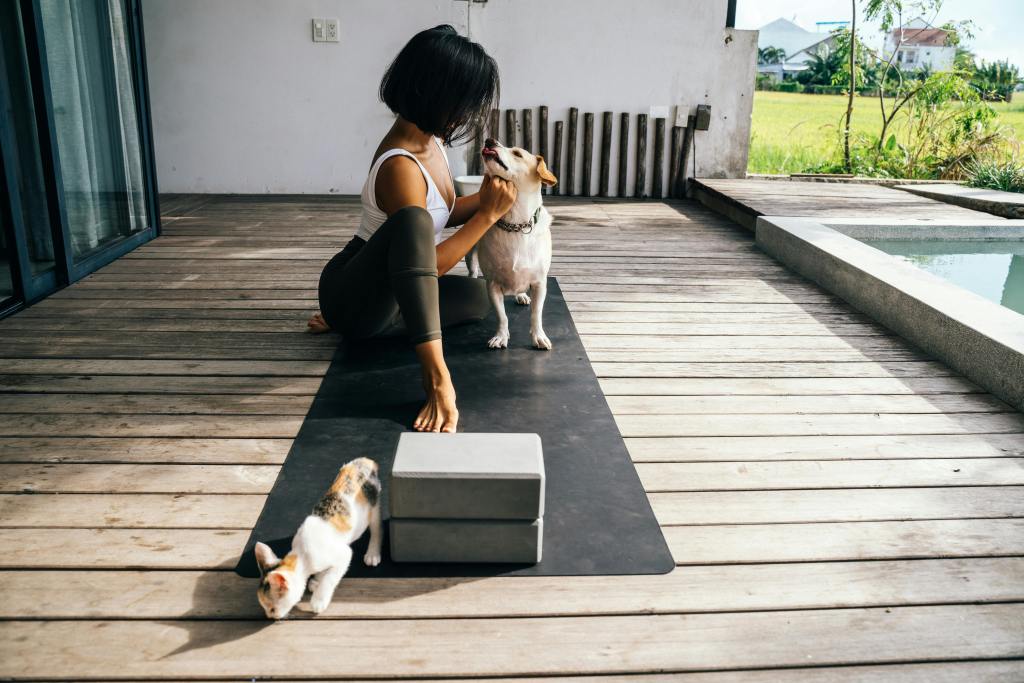
- Place a block along your spine in Modified Fish Pose (Matsyasana).
- Place blocks flat under both hands in Upward Facing Dog (Urdhva Mukha Svanasana).
- Place a block under your sacrum in Supported Bridge Pose (Setu Bandhasana).
- Place blocks flat under both hands or both knees in Cat-Cow Pose (Bitilasana Marjaryasana).
- Place a block between your knees in Supine Spinal Twist (Supta Matsyendrasana).
- Place blocks under your knees in Butterfly Pose (Baddha Konasana) or Supine Butterfly Pose (Supta Baddha Konasana).
- Place a block under your seat in Yogi Squat (Malasana).
- Place a block flat under your sacrum in Legs Up the Wall Pose (Viparita Karani).
- Sit on a block in Easy Seat (Sukhasana).
These are just a few ideas for using blocks in yoga. Remember, you can experiment with various heights/widths in block positioning within each of these poses to find your ideal balance.
You can also use blocks as tools to improve strength building and alignment in yoga. For example, you can squeeze a block between your thighs while doing Boat Pose (Navasana) for extra core and inner thigh work. In a yoga side bend like Standing Crescent (Indudalasana), you could hold onto a block as a reminder to keep the heart open and chest lifted.
If you have a favorite yoga pose, there’s probably a way to incorporate a block to go somewhere new with it.
Remember: always consult your physician before beginning a yoga practice.
How Do You Use Yoga Blocks in a Practice?
Do you enjoy using yoga blocks in your own practice? I’d love to hear how you incorporate them. Please share your thoughts in the comments.
What do you want me to write about next on the Alexandria yoga blog? Send me a message.
About the author: Nicki Escudero is a journalist and RYT-200 yoga instructor certified by Yoga Alliance. She teaches group and private yoga classes in Alexandria, VA, and Washington, DC. Contact Nicki.
Leave a Reply