
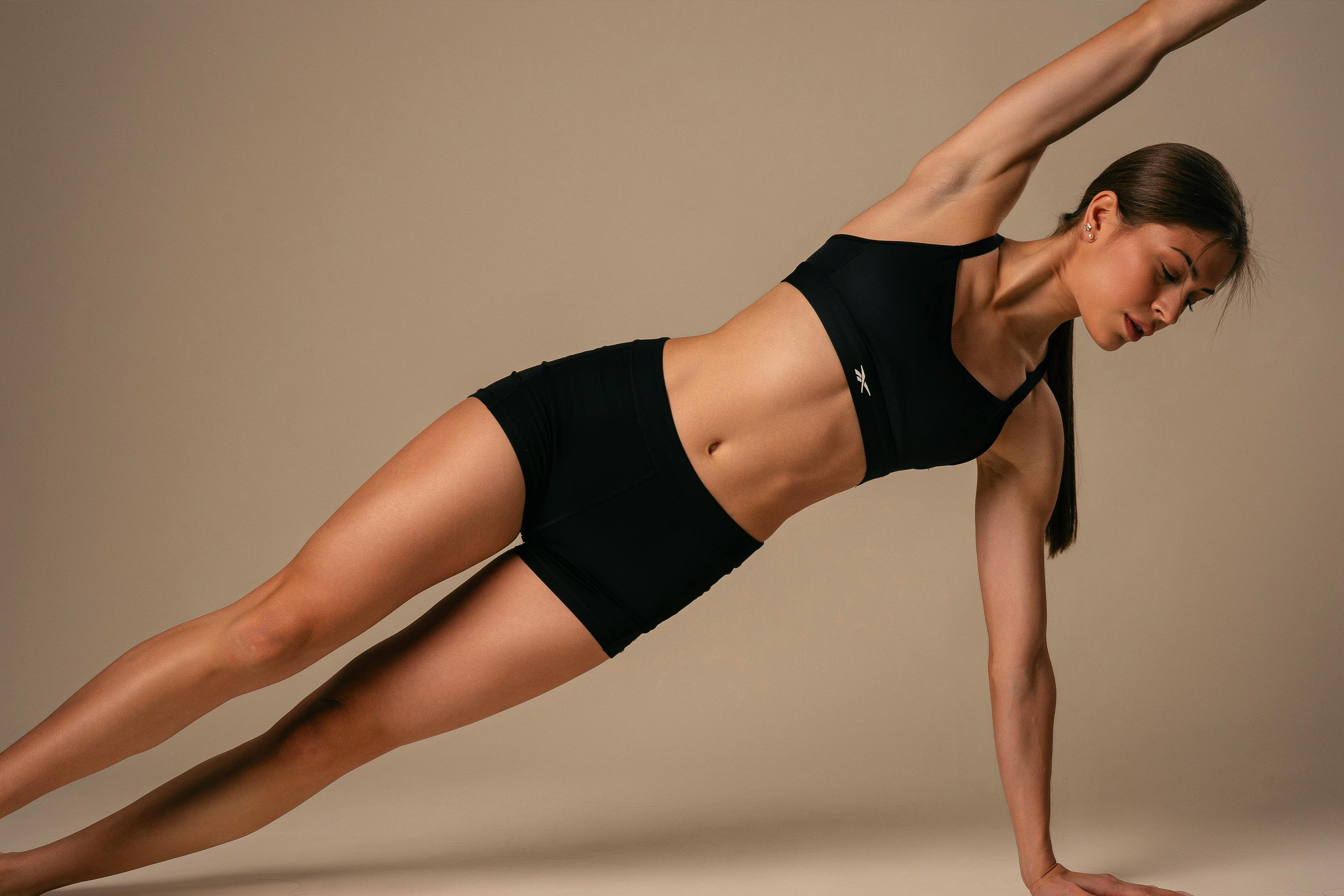
In a yoga class, sometimes you’ll hear the instructor tell you to “go to your edge”. When I first heard this, I pictured myself on a mountain cliff. On the one hand, there’s a beautiful view that you can only experience by going right to the edge. On the other, go too far, and you’ll fall right off.
Similarly, in yoga, you can get a fuller benefit out of your practice by pushing yourself to new depths in terms of stretching and feeling your way inside a pose. But going too fast or too deep into a pose, without using mindfulness as a guide, could result in pain and, worse, injury that sets you back.
My favorite yoga instructors encourage students to “play” in their practice, and that includes trying new things and going toward a yoga edge. Here’s how to play with your edge without injuring yourself during yoga.
What Is a Yoga Edge?

In yoga, what instructors might refer to as your “edge” is that space where you’re doing whatever your deepest expression is for that day, without going past the edge to the point you feel pain. You can feel toward your edge by using these distinctions.
| Yoga Edge | Pain |
| A feeling of discomfort | Sharpness |
| Feeling something new, but that doesn’t hurt | Twinging or burning sensations |
| Going deeper than you have before | An alarming sound, like a pop or crack, that accompanies extreme discomfort |
| Feeling mentally and physically challenged | Tension that signals a panicked warning to the brain |
As you can see from the above chart, a feeling of discomfort in yoga is OK. We need to feel a little uncomfortable in order to grow and evolve our practice.
But if you feel physical sensations that cause alarm systems to ring in your mind, you’re probably feeling pain. The good news is, a yoga practice can help you be better at differentiating. As we focus on how our bodies feel with each movement and adjustment, we can gradually go deeper into poses without venturing into painful territory that could lead to injury.
As always, before you start any physical exercise regimen, talk with your physician. Ask for help with identifying warning signs of pain, so you know what to look for during a yoga practice.
Tips for Finding Your Yoga Edge Without Feeling Pain

In a long-term yoga practice, the goal should be to continually evolve your “edge”. That might mean squatting a little deeper and holding for longer in Chair Pose (Utkatasana). It might mean, inch by inch, reaching your fingers closer to your toes in a Seated Forward Bend (Paschimottanasana). It might mean becoming better at engaging your core, controlling your breath and achieving stillness while holding a long Boat Pose (Navasana).
To find your edge, and keep finding it in subsequent practices, use the following tips.
- Focus on micromovements. Setting yourself up to find your edge will be easier if you gently make your way into a pose and move slowly from there. With each micromovement, you can check in with how your body feels, before progressing into another one that deepens your pose.
- Check in with both physical and mental systems. Pain can cause an involuntary physical response, like immediately pulling back from what you’re doing. Discomfort, on the other hand, may tell your brain to stop, when really, your body is perfectly capable of continuing. As you play with your edge, try to differentiate between discomfort that’s suggesting you’re not capable of handling a movement, and pain that’s telling you your body is actually in distress. Practicing mindfulness in any yoga practice, and throughout your everyday life, can help you be more in tune with mental reactions to physical challenges.
- Strive for a balance between ease and effort. Use your breath to stay calm and centered as you go deeper into a pose. When you want to progress, you’ll have to put in effort and potentially feel a little discomfort along the way. But you should also feel like your body supports you in what you’re doing, not asking you to retreat. Let your breath guide your effort. Check in with the breath to ensure you can handle going further, pain-free.
It’s also important to avoid “pushing through the pain”. There’s no need to do this in yoga, especially because doing so could cause injury and set back our practice.
Use mindfulness techniques to get more in touch with your body’s physical sensations on and off the mat. Focus on micromovements, and tune in to your body to differentiate between discomfort and pain.
Always Listen to Your Body
One way you can set yourself up for injury in yoga is to try to out-do those around you, or even go further than what your instructor is guiding you towards. Take comfort in the fact that most people aren’t paying as much attention to you as you are yourself. The “spotlight effect” makes us think people are noticing us more than they actually are. There’s no need to worry about anything that’s happening outside of your own yoga mat.
Pay attention to both your body’s sensations and the messages you’re receiving in your head about how you’re feeling. Use your breath as a guide to find your edge. Always strive for a balance of effort and ease, even if you’re feeling a little discomfort.
One notable way I found my “edge” in recent years was when I was doing Plow Pose (Halasana). For years, I had never reached my toes to the floor behind me. I would move my body backward, but something in my head was telling me it wasn’t going to be possible, even when my body felt zero pain.
One day, I decided to keep going backward. I was delightfully surprised when my toes touched the ground behind me. Now, whenever I am in Plow Pose, I go backward to the point my toes touch the ground.
I hope this story reminds you that, often, it’s our mental limitations that are holding us back from progressing in our yoga poses. Safely move deeper into your poses, and you might find a new edge in an Alexandria VA yoga class or wherever you take yoga.
Do you have a story about finding your edge? Share in the comments.
Have a yoga topic you’d like me to write about on this yoga in Alexandria blog? Send me a message.
About the author: Nicki Escudero is a journalist and RYT-200 yoga instructor certified by Yoga Alliance. She teaches group and private yoga classes in Alexandria, VA, and Washington, DC. Contact Nicki.



Leave a Reply