
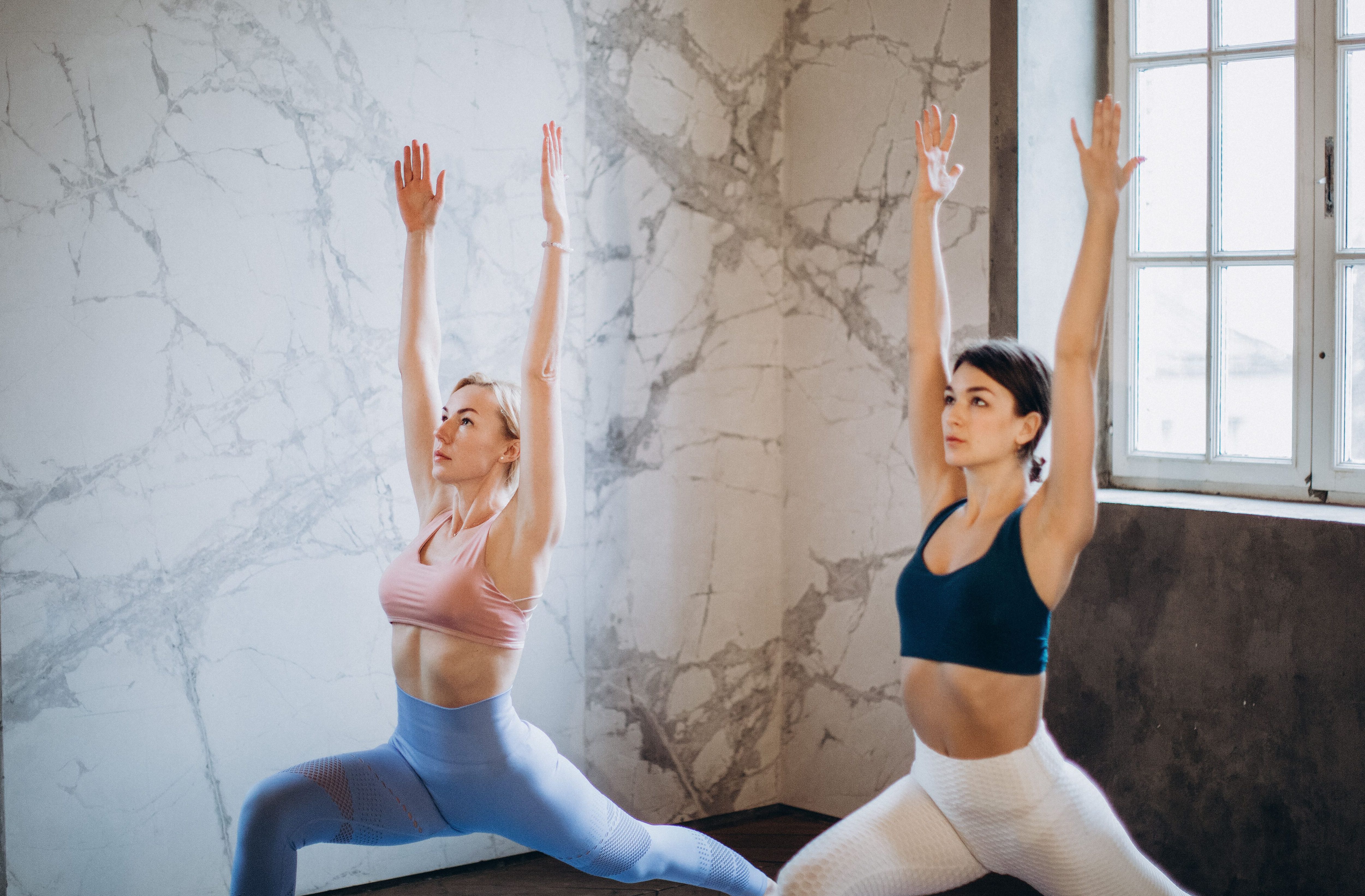
One of the most foundational poses in a yoga practice is Warrior I (Virabhadrasana I). This pose can be quite challenging, as the full expression of the pose has the yogi bringing their thigh parallel to the ground, which can be a big quad strengthener. I see yogis who have been coming to my classes for years who are still working on getting into the full expression of this strong, empowering pose.
Warrior I has numerous benefits, from engaging the glutes and the legs, to increasing lung capacity. Learn how to do Warrior I in yoga, ways to add variety to the pose and more about the benefits of this classic yoga movement.
How to Do Warrior I in Yoga
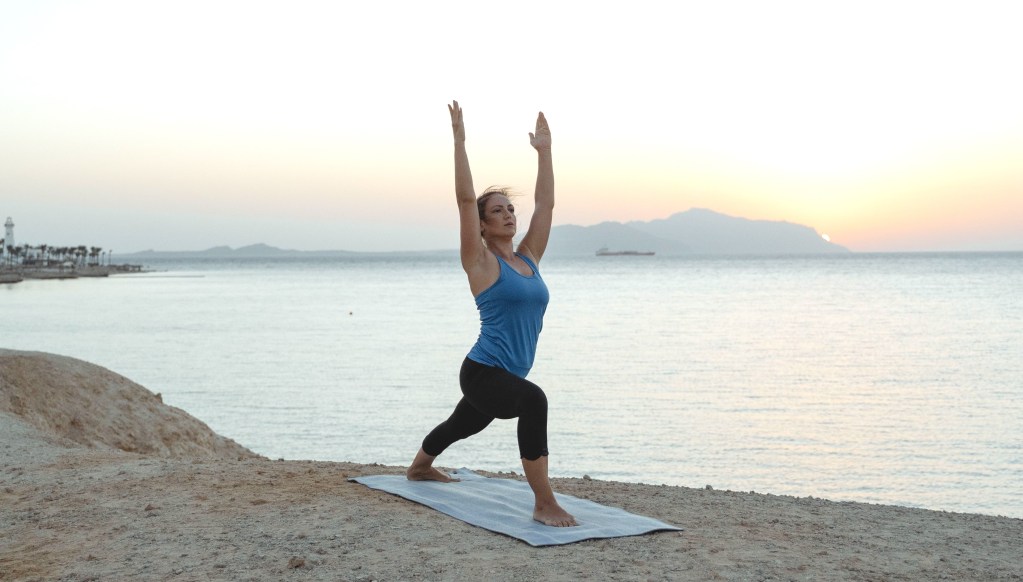
When I’m teaching Warrior I in an Alexandria VA yoga class, there are a couple ways to come into it. One way is to start from a runner’s lunge, as such.
- Make your way into a runner’s lunge. Do this by either coming into a runner’s lunge from three-legged dog from Downward Facing Dog, or, by folding forward, planting your hands, and stepping one leg back into a runner’s lunge.
- Heel-toe the front foot to the edge of the mat that’s on the same side as the foot (for example, move the front right foot to the right edge, or vice-versa.)
- Plant the back foot down at a 45-degree angle, so the back toes face the top corner of the same side of the mat (for example, point the back left toes toward the top left corner of the mat).
- Come onto your fingertips, lift your chest off your thigh, and raise both arms up.
You can also come into Warrior I from a standing position, like so.
- Start in Tadasana (Mountain Pose) at the top of your mat.
- Place your hands on your hips for balance. Lift one leg to come into One-Legged Tadasana. Step that leg back to come into a Crescent Lunge, with the ball of the back foot on the ground.
- Heel-toe the front foot to the edge of the mat that’s on the same side as the foot (for example, move the right foot to the right edge, or vice-versa.)
- Plant the back foot down at a 45-degree angle, so the back toes face the top corner of the same side of the mat (for example, point the back left toes toward the top left corner of the mat).
- Raise both arms up.
Once you’re in the pose, you’ll want to try to maintain a deep bend in the front knee, while keeping it directly over the front ankle. To get your front thigh parallel to the ground while keeping the knee over the ankle, you may discover you need to widen your stance.
You also want to keep the back hip pointed forward, like your hips are headlights on a car. There may be a tendency for the back hip to open up to the side. I like to cue students to place their hands on their hips as a reminder to point them forward, then raise their arms up.
Ensure your feet are hip width distance apart, like they’re on train tracks, not a tightrope. Settle into the pose. Use the breath to stay steady and maintain the posture.
Benefits of Warrior I
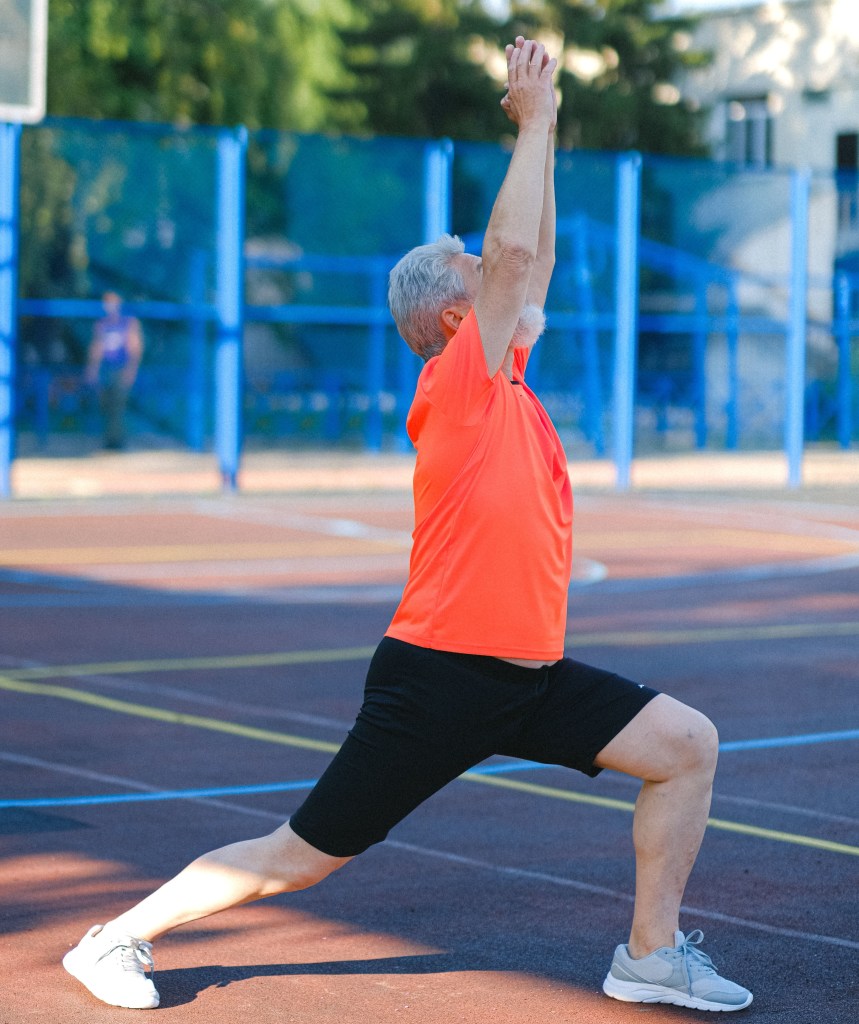
There are many benefits to Warrior I. Because it’s physically challenging, it can get your heart beating and blood pumping. Maintaining the pose helps you increase focus and builds strength in your legs, arms and abdominal muscles.
According to “Yoga Toolbox”, some other benefits of Warrior I include:
- Cultivates flexibility and stability in the shoulder and pelvic girdles
- Supports digestion and elimination
- Benefits the immune and lymphatic systems
You should also feel a really nice stretch all along the back leg, from the ankle up through the hamstrings. The front quad will be strengthened, while engaging your core will work you abs. Maintaining a strong, straight line upward with your arms engages the shoulders, biceps and triceps.
Even though Warrior I is so common in most yoga practices, there’s always somewhere new to go with it. By holding the pose for longer and maintaining a deep posture with the thigh parallel to the ground and arms raised up high, holding Warrior I for several breaths can be quite the workout. Make sure to balance it out on the other side.
Warrior I Variations
You can play with Warrior I in lots of ways in a yoga practice. The following are some of my favorite variations.
- While in Warrior I, bend the arms into a cactus arm position to open up the heart center.
- Reach behind you, interlace your fingers, open up the chest, and bow the head to come into Humble Warrior (Baddha Virabhadrasana). Bring the shoulder that’s closest to the front leg to the inside of the front leg’s knee. Reach the knuckles overhead, and let your head hang heavy.
- To alleviate some of the pressure on the thigh, use an inhale to straighten the front leg, and reach the hands overhead together. On the exhale, bend the knee to come back into Warrior I. Repeat several times to create a Warrior I flow.
You can also bow the upper body forward and reach the arms straight behind you like bird wings. I like moving into Warrior III (Virabhadrasana III) from Warrior I, as well.
How Do You Do Warrior I?
What’s your favorite way to get into Warrior I? Do you have a favorite Warrior I variation? I’d love to hear from you! Comment below.
Learn about other yoga poses in these yoga pose basics:
- Sukhasana (Easy Seat)
- Dancer Pose (Natarajasana)
- Mountain Pose (Tadasana)
- Pigeon Pose (Eka Pada Rajakapotasana)
- Savasana (Corpse Pose)
- Supine Spinal Twist (Supta Matsyendrasana)
- Child’s Pose (Balasana)
Is there a yoga pose you’d like me to do a deep dive on next on this yoga in Alexandria blog? Send me a message.
About the author: Nicki Escudero is a journalist and RYT-200 yoga instructor certified by Yoga Alliance. She teaches group and private yoga classes in Alexandria, VA, and Washington, DC. Contact Nicki.

Leave a Reply