

Most yoga classes, I’m always going to spend at least some of the time closing my eyes. During Savasana (Corpse Pose), which is typically the end of a yoga class, students are generally encouraged to close the eyes for the 5 minutes or so that close a yoga class. But I also like to close my eyes at the beginning of a class when I’m centering for yoga, when I’m doing warm-up poses and even when I want to challenge myself, like in a balancing yoga posture.
I have lots of personal reasons I like to close my eyes, but scientific studies also offer research-backed benefits of closing your eyes to enhance both exercise gains and mental health benefits. Learn why during your next yoga practice, you may want to take a moment or several to close your eyes and go inward as you practice.
Going Inward in Yoga: Pratyahara
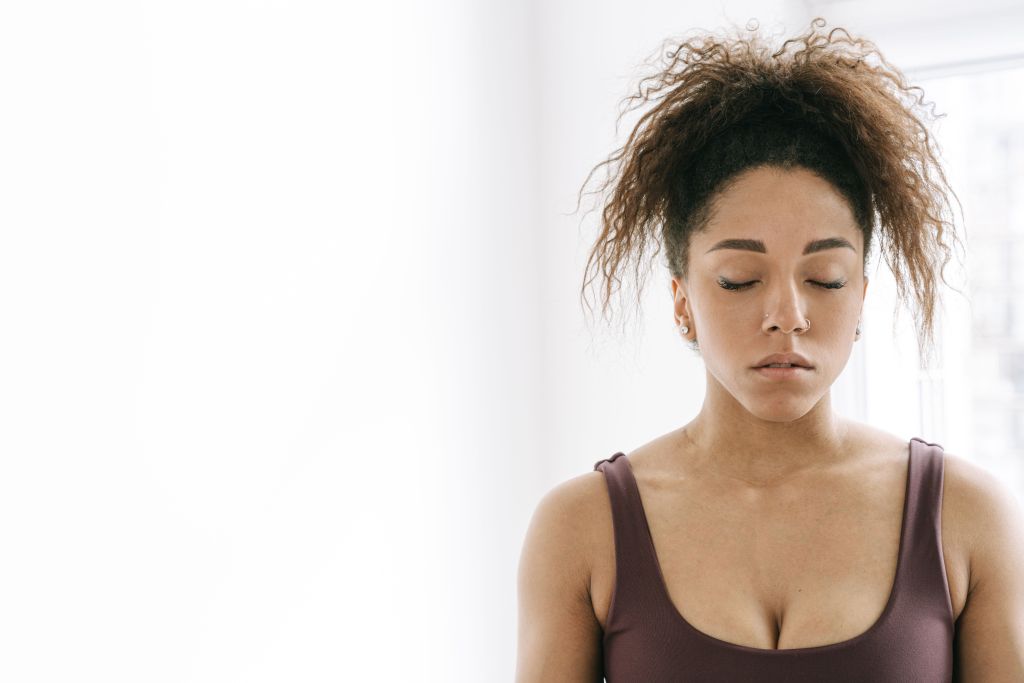
Withdrawal of the senses, such as closing your eyes, relates to an ancient yogic teaching known as the “eight-limbed path” by the great sage Patanjali. Other limbs include things like postures and breath control, which we typically practice throughout a yoga class.
Pratyahara is one of the eight limbs, and it means control of anything we take into ourselves from the outside. Sensory withdrawal, relating to pratyahara, motivates you to go inward and focus on gaining mastery of the mind, even when you’re doing physical postures in tandem with practicing this limb.
I used to attend classes with a woman who would always wear a sleep mask during her practice. She’d simply listen and concentrate on the verbal instruction, and move her body accordingly. She was always in sync with all the other students, who may have been at a disadvantage by comparing themselves to other people or judging themselves in the mirror.
As a teacher, I often encourage my students to close their eyes during the centering portion of class and into the warm-up, as a way to feel more in touch with the body. By withdrawing the sense of sight, you may discover that you “feel” the poses of yoga more, as well as can improve your sense of focus and concentration as you move throughout class.
How Closing Your Eyes Can Improve Physical Fitness & Mental Health
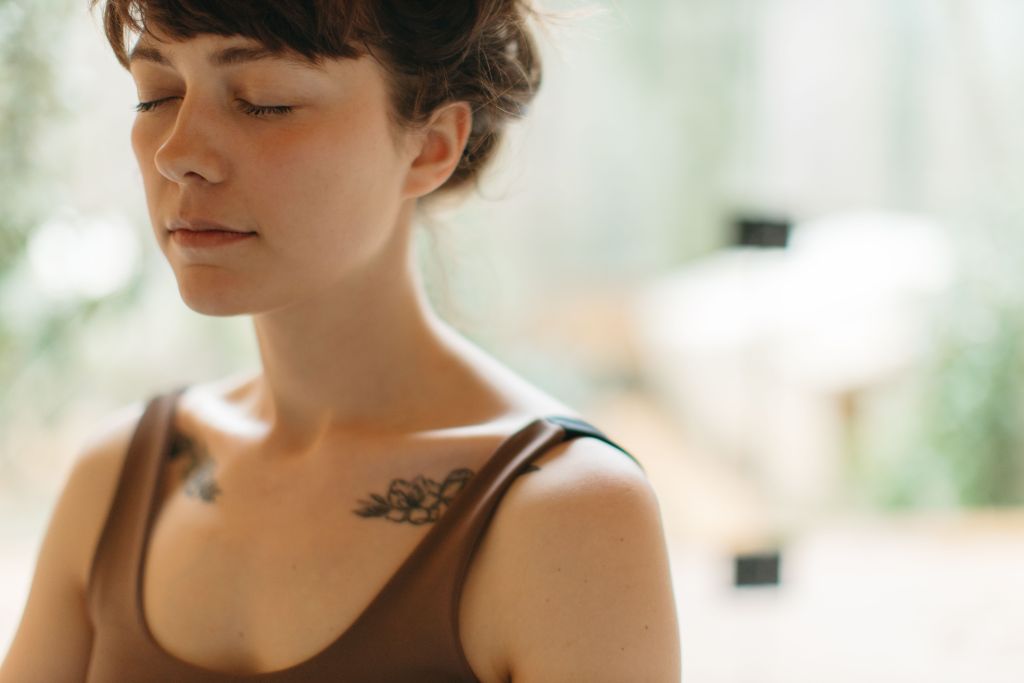
Besides being something my body and mind crave, closing the eyes can have real, science-backed benefits for both the fitness side of yoga, as well as yoga mental health benefits. Consider the following.
- A study on chronic stroke patients published in the “Journal of Physical Therapy Science” found walking on a treadmill with eyes closed resulted in more pronounced benefits related to gait, balance and stride compared to those who walked with their eyes open.
- Doing light-to-moderate intensity exercise with the eyes closed increases alpha activity, which positively impacts focus, information processing and memory access, according to a study published in “Scientific Reports”.
- Eye closure improves memory and enhances visualization, according to a study published in “Memory & Cognition”. Doing this in a yoga practice could help you recall poses better in the future and achieve better physical gains through visualization.
When we practice with our eyes open, we may become distracted by what’s going on around us, which could cause our form to suffer. Closing the eyes could help you achieve better form, but be sure to do so safely.
Another way to gain the benefits of closing your eyes in a safe manner is to move into a pose safely and strongly (such as Warrior II [Virabhadrasana II]) and then close the eyes to take some time to notice how you feel in the pose.
You can also close your eyes to challenge yourself. For example, after safely moving into Tree Pose (Vrksasana), I love to play in the pose and challenge myself by closing the eyes. In fact, the woman with the sleep mask whom I’d often practice near would always do every balancing posture, eyes closed.
When Do You Like to Close Your Eyes in Yoga?

Closing your eyes in yoga is never a requirement at any point, even during Savasana. Closing the eyes can make some people feel deeply vulnerable, depending on what someone has experienced. Like I always tell my students, make your practice your own. Do what feels comfortable for you. If a cue or instruction doesn’t align with you at that moment, skip it or modify it.
If you’re comfortable closing your eyes, you might benefit from doing so more often in a practice. Even when the whole class is standing in a pose like Warrior I (Virabhadrasana I), you might close your eyes to go more deeply into the pose. Notice how your arms feel as you raise them. Feel the sensations in your front bent leg and in the back leg that’s straight. How does it feel to engage your core more and stand up a little straighter while going a little lower with the front leg?
These are all nuanced factors you can start to pay attention to more with the help of closing your eyes. Experiment, and be safe, as you close your eyes to go inward more in your practice.
When do you like to close your eyes in a yoga practice? Share your thoughts in the comments!
Have a topic you’d like me to write about next on this Alexandria, VA, yoga blog? Contact me.

Leave a Reply