

If I were to name the two most quintessential yoga poses that are found in most flow practices, they’d be Downward Facing Dog (Adho Mukha Svanasana) and Child’s Pose (Balasana). Child’s Pose, in my opinion, is one of the best yoga poses around. It:
- Encourages rest, which is something we often lack in today’s society
- Offers a moment of vulnerability and going inward, with our heads forehead-down on the mat, which isn’t a posture we typically take in life
- Provides a juicy stretch for the shoulders and relaxation for the hips, which can often store emotional baggage
Child’s Pose may be a resting posture, but it’s also very challenging, especially if you have tight hips. Child’s Pose is a posture that, for many, will require years of practice in order to go deeper into the full expression. I’m someone who’s still working on relaxing while moving my hips to my heels!
When I teach yoga, I love to introduce lots of variations for Child’s Pose in my Alexandria yoga classes. Learn how to do Child’s Pose safely, get tips for going deeper, and discover variations to mix up your Child’s Pose practice.
Always consult with a physician before beginning a yoga practice.
What Is Child’s Pose?
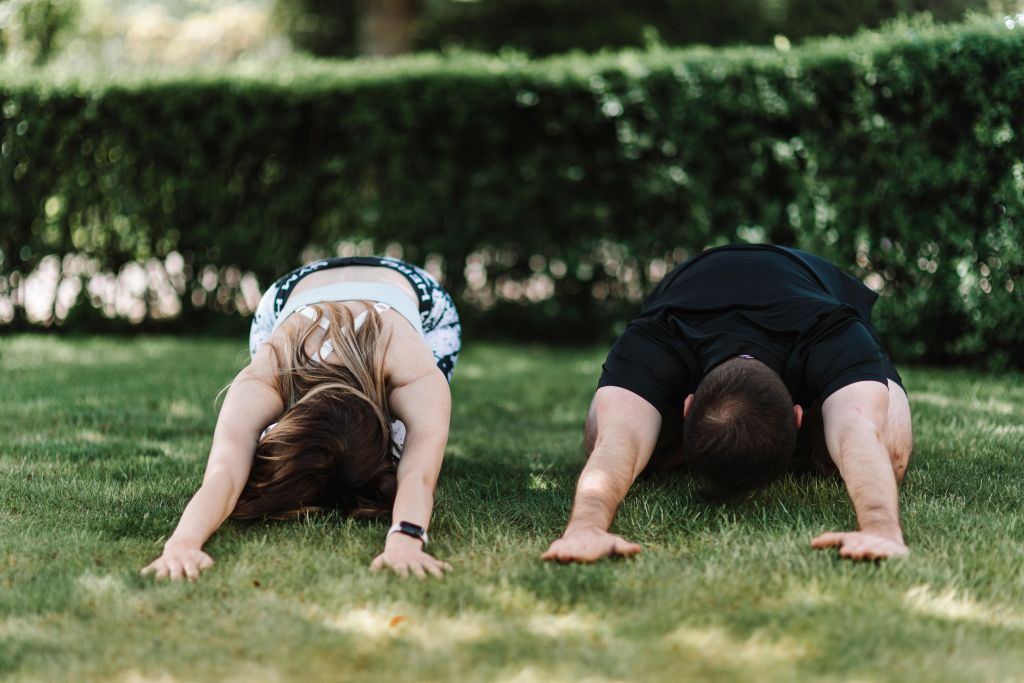
Child’s Pose is a prone resting posture in yoga. I typically introduce it early on in a class, during the warm-up, so students know they can come back to Child’s Pose at any point in a practice when they need to rest. If you want to attend a yoga practice and stay in Child’s Pose the entire class, I say, go for it! Your practice is your own, so in my classes, I encourage students to take as many Child’s Poses as they need to feel good.
Child’s Pose is often found in flows after an energizing sequence, to break apart a flow and give students the opportunity to rest and return to the breath. I typically integrate Child’s Poses after doing vigorous standing sequences. I also sometimes give students the opportunity to choose to rest in a Downward Facing Dog or to release the knees to the mat to move into Child’s Pose.
Personally, whenever I’m a student in a class, I always take a Child’s Pose when it’s offered. In previous years of my yoga practice, I would push myself harder, and always take the more challenging options (for example, staying in Downward Facing Dog, rather than going to Child’s Pose). Now, I relish being offered a Child’s Pose and take it without worrying about what anyone else thinks. We have so few opportunities in our busy lives to embrace permission to rest, so I use my yoga practice to say yes to resting whenever I can.
How to Do Child’s Pose
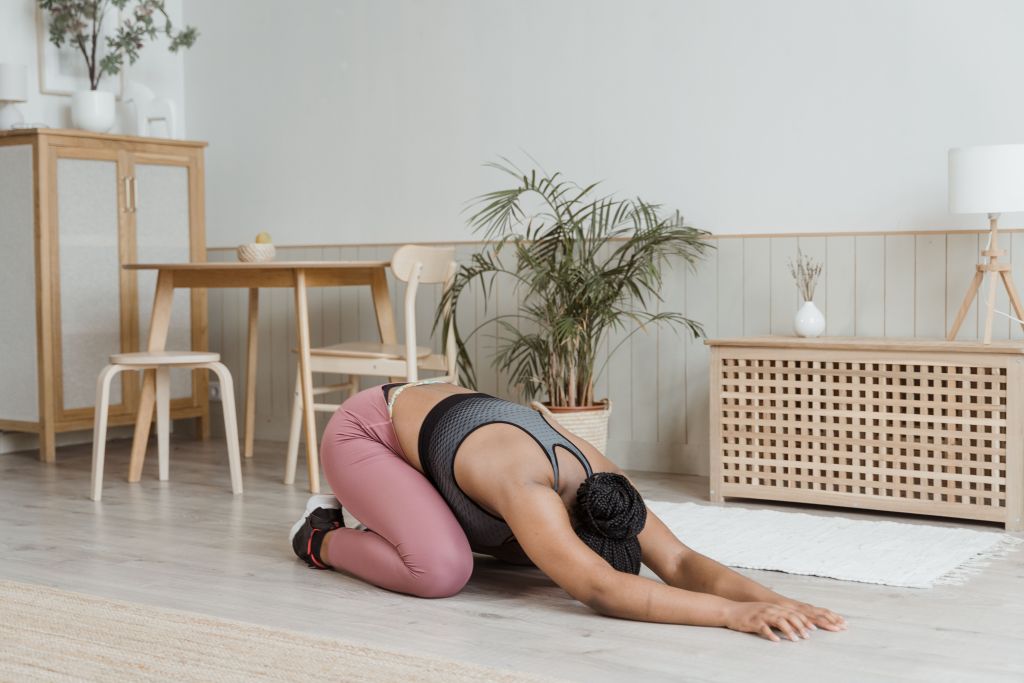
A quote that appears in “Yoga Toolbox” that accompanies Child’s Pose is, “Resting in the safety of my inner being, I experience absolute serenity.” Embody this spirit as you come into the pose. Here’s how I’d cue a Wide-Knee Child’s Pose (Prasarita Balasana), what I would say is the most common variation of Child’s Pose, for my students in an Alexandria VA yoga class.
- Comes into a Tabletop (Bharmanasana) pose, with the hands touching the mat directly under your shoulders, and your knees touching the mat directly under your hips.
- Bring your big toes to touch, and widen your knees to the edges of your mat.
- Sink your hips back toward your heels.
- Stretch your arms forward.
- Rest your forehead on the mat. Let your chest and stomach sink toward the mat.
As you come into Child’s Pose, you may feel tightness in your hips that makes it difficult for you to relax your hips toward your heels. This is totally normal. Be careful to distinguish progress vs. pain in yoga. If something is hurting you, slowly back up from your progression in the pose, and go to a variation that feels better.
I like to cue students to “send your breath where your body needs it”. In Child’s Pose, use your exhales to relax a little bit more into the pose with every breath.
While this Wide-Knee Child’s Pose is the one I’ve encountered most often in my 15 years of yoga practice, there are other variations you may find you enjoy doing more. Feel free to choose something different to make your practice your own.
Child’s Pose Variations

In addition to the Wide-Knee Child’s Pose, here are some other ways to come to a prone Child’s Pose resting posture on your mat.
- Bring your knees, shins and feet together. Sink your hips back toward your heels. Rest your chest on your thighs. Rest your forehead on the mat. Reach your arms either forward, or behind you with the arms by your sides and palms up.
- In either a Wide-Knee Child’s Pose or Child’s Pose where you’re reaching the arms forward, come onto your fingertips and lift the palms up. This is a little more challenging and helps you stretch out your shoulders a little more deeply in this active Child’s Pose.
- In a Wide-Knee Child’s Pose, flip the palms and bring the pinkies towards each other. Imagine you’re sliding your shoulder blades down your back to intensify the shoulder and back stretch.
- In a Wide-Knee Child’s Pose, keep your lower body steady. Lift your chest, and walk your arms over to the left. Place your right hand on the left for a yoga side body stretch for the right side. Repeat on the other side, by moving your arms through center, and placing your left hand on the right for a yoga side body stretch on the left side.
- For a bonus tricep stretch while you’re in either Wide-Knee Child’s Pose or Child’s Pose, bring the palms together with the pinkies on the ground and the thumbs pointing up, like you’re clapping your hands. Draw the thumbs to the base of the neck, as you dig the elbows into the ground.
As you can see, there are so many variations for Child’s Pose. You can always make Child’s Pose more challenging by engaging your core, lifting the palms off the mat or adding a tricep stretch. Or, simply get into the most relaxing shape you can, and enjoy resting.
Benefits of Child’s Pose in Yoga
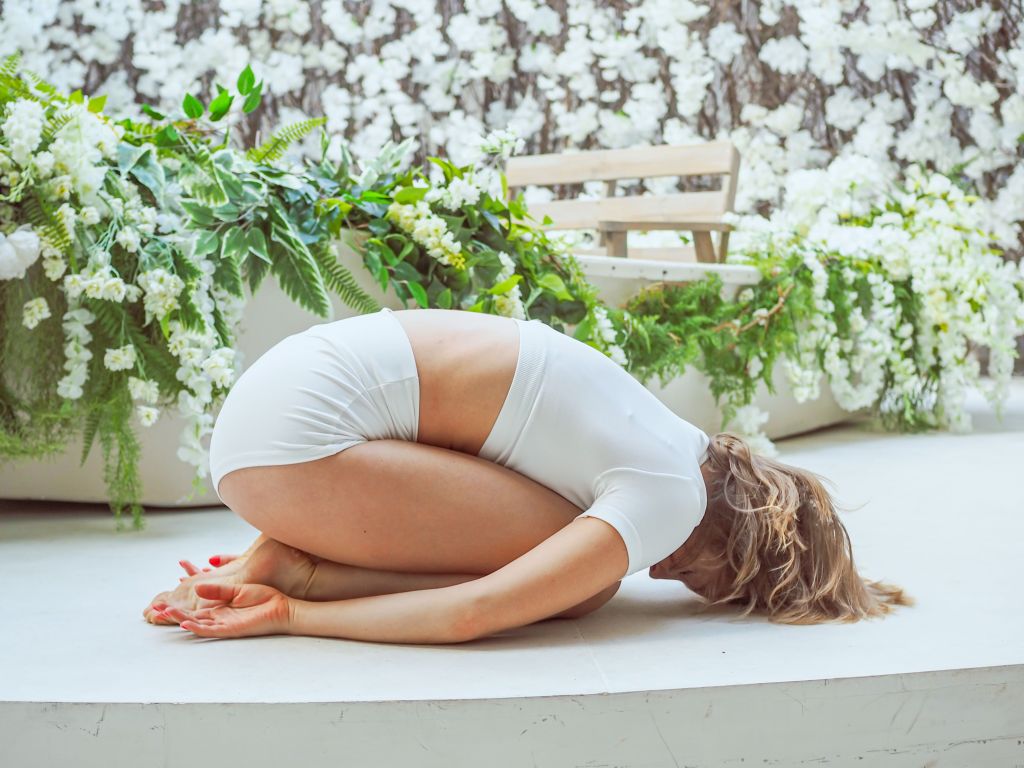
Besides giving yourself permission to rest in our busy lifestyles, Child’s Pose also has lots of physical benefits. According to “Yoga Toolbox,” Child’s Pose:
- Encourages flexion of the hips, knees and spine
- Eliminates low back tension
- Massages kidneys, abdominal organs and adrenal glands
- Soothes menstrual pain
The “Yoga Toolbox” declares Child’s Pose “heals and rejuvenates the entire body” and “cultivates safety and serenity”. This is a pose you can do as part of a bedtime yoga routine, or during a commercial break when you’re watching TV. Use every breath to go deeper into relaxation.
Do You Love Child’s Pose?
Despite all the benefits of Child’s Pose, it can still be a really challenging pose that brings some discomfort, especially in the hips. If you feel uncomfortable but not in pain, you might take that as a sign that you’re progressing your stretching capabilities and are moving deeper into a pose. Be gentle with yourself, but also know a little discomfort could signal that you’re making progress.
I still have trouble relaxing my legs in a Wide-Knee Child’s Pose, but I continue to practice this pose for the mental relaxation benefits it provides. I also love to challenge myself by walking my fingers farther forward to deepen the shoulder stretch.
What are your thoughts on Child’s Pose? What’s your favorite yoga pose? Leave a comment, so I know what to explore next!
Is there a topic you’d like me to write about on this yoga in Alexandria blog? Message me.
About the author: Nicki Escudero is a journalist and RYT-200 yoga instructor certified by Yoga Alliance. She teaches group and private yoga classes in Alexandria, VA, and Washington, DC. Contact Nicki.


Leave a Reply