

If you’re taking yoga at a recreation center or yoga studio, you may see different types of yoga offered. Hatha yoga is one such category.
Whether you’re completely new to yoga or have been taking yoga classes in Alexandria or elsewhere for awhile, you may be wondering: What is hatha yoga? How is hatha yoga different from vinyasa yoga? Is hatha yoga good for beginners?
Hatha yoga is one of my favorite styles of yoga. I enjoy the opportunity hatha yoga offers to work on alignment and how it gives yogis time to really settle into poses. Learn more about hatha yoga, benefits of hatha yoga and how it differs from other yoga styles.
Consult with a physician before beginning a yoga practice.
Hatha Yoga Explained

Yoga International describes hatha yoga practices as “integrating your breath into each pose in order to find ease and steadiness within”. I really like this definition. Indeed, in most hatha yoga classes I’ve taken, students will go through various yoga poses and be given several breaths to progress yoga poses.
That’s why hatha yoga classes are great for beginners, as you’re provided plenty of time to learn how to get into proper alignment. For more advanced yogis, hatha yoga gives you the opportunity to achieve better alignment or advance your pose through improved core stabilization, posture and/or alignment.
In reality, the actual word “hatha” translates as willful or forceful in Sanskrit. It relates to proper form and posture, which is why there’s more time to engage in a pose. For both students who are new to yoga altogether and want to learn poses, and for students who want to take their time to pay more attention to detail in poses, hatha is a great option.
Hatha Yoga Vs. Vinyasa Yoga
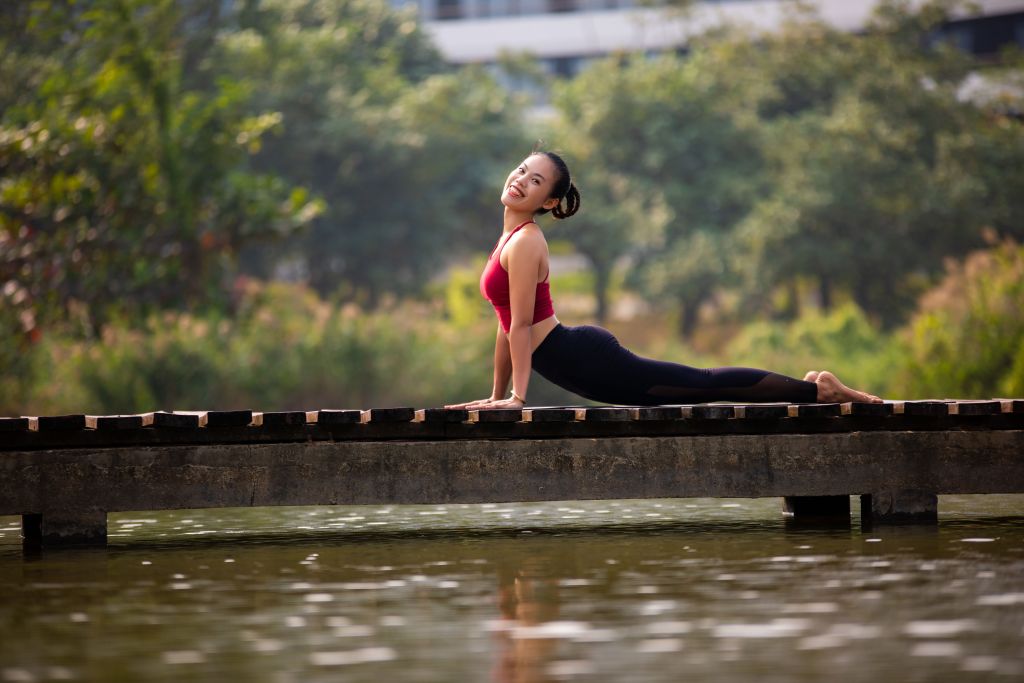
Vinyasa yoga is often known as “one breath, one movement” type of yoga. As you inhale, you move your body one way. As you exhale, you transition to a new movement.
There is also a common sequence of movements that’s often referred to as a “vinyasa flow,” which I’ve experienced in countless yoga classes from teachers at diverse yoga studios. Typically, this flow is derived from what’s known as Sun Salutation A (Surya Namaskar A). The moves are along the lines of:
- Start in Mountain Pose (Tadasana).
- Inhale, and bring your arms up overhead.
- Exhale, and fold into Uttanasana (Standing Forward Fold).
- Inhale into Halfway Lift (Ardha Uttanasana).
- Exhale, plant the hands, and step or hop your legs back into High Plank (Phalakasana).
- Inhale in Plank.
- Exhale, and lower into a push-up, either by lowering the knees onto the ground, or keeping the knees lifted in Chaturanga Dandasana (Four-Limbed Staff Pose).
- Inhale into Cobra (Bhujangasana) or Upward-Facing Dog (Urdhva Mukha Svanasana).
- Exhale, and move into Downward-Facing Dog (Adho Mukha Svanasana).
Doing a simple sequence like this can really get your heart pumping and generate heat. That’s why I consider vinyasa flow more of an aerobic workout, while I consider hatha yoga to be more of an anaerobic workout, or one that focuses more on stretching, depending on the poses that are chosen.
In hatha yoga, you won’t necessarily be moving from pose to pose with each breath. You may hold a pose for a minute or more, using your breath to find the balance between effort and ease.
Who Is Hatha Yoga Good For?
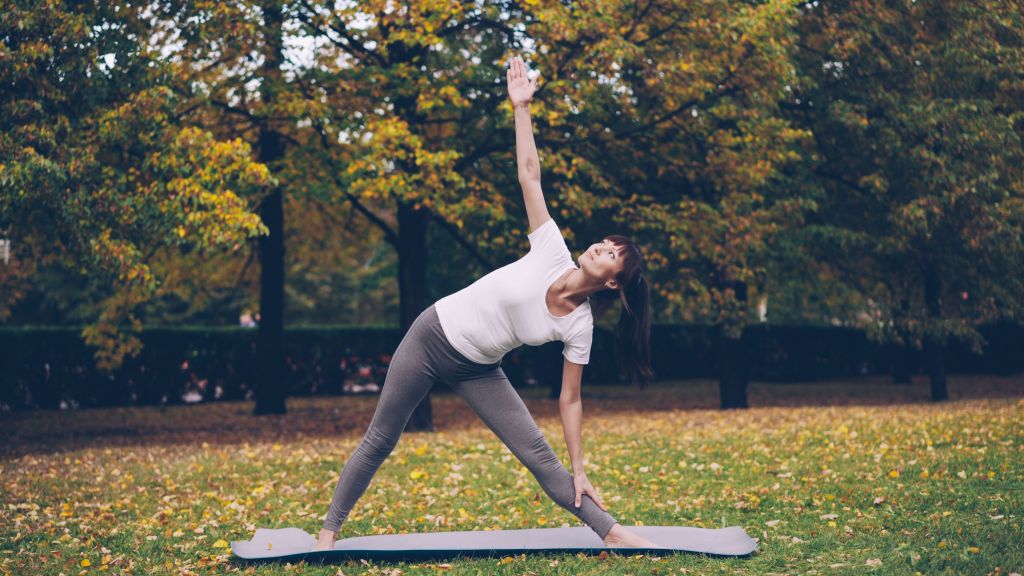
If someone is concerned about being a yoga novice, I’d recommend they start with a hatha yoga class to introduce themselves to proper alignment in various yoga poses. I’ve been in vinyasa yoga classes where teachers cued quickly right away. If you’re not sure what the names of certain poses mean, or you want to build confidence moving from pose to pose, hatha yoga helps.
I also enjoy taking hatha yoga classes as a more experienced yogi. I find them to be more relaxing than vinyasa flow classes. I enjoy trying to go somewhere new with my yoga poses. Since I have more time to practice each pose, I can work on better posture and alignment, which will hopefully carry over next time I’m in a faster-paced vinyasa flow class.
Personally, I tend to teach a “slow flow” yoga practice that blends both hatha yoga modalities and integrates some vinyasa flow movements. I teach this class to beginners and advanced yogis alike. I prefer teaching this style, because I think it gives newer yogis the opportunity to learn the poses we’ll be doing in vinyasa sequences that come towards the second half of class.
You can always ask a yoga studio or fitness center to explain the class style and to help you find a style that matches your comfort level. But if all you see is “hatha yoga” and “vinyasa yoga” on a calendar, it’s probable that the hatha yoga class will be slower-paced, while the vinyasa yoga will be at a faster pace linking your breath to your movement.
Do You Enjoy Hatha Yoga?

What’s your experience with hatha yoga like? Do you prefer hatha yoga classes to another style of yoga? Share your experience in the comments.
Is there another style of yoga or topic you’d like me to write about on this yoga in Alexandria blog? Message me.
About the author: Nicki Escudero is a journalist and RYT-200 yoga instructor certified by Yoga Alliance. She teaches group and private yoga classes in Alexandria, VA, and Washington, DC. Contact Nicki.



Leave a Reply