
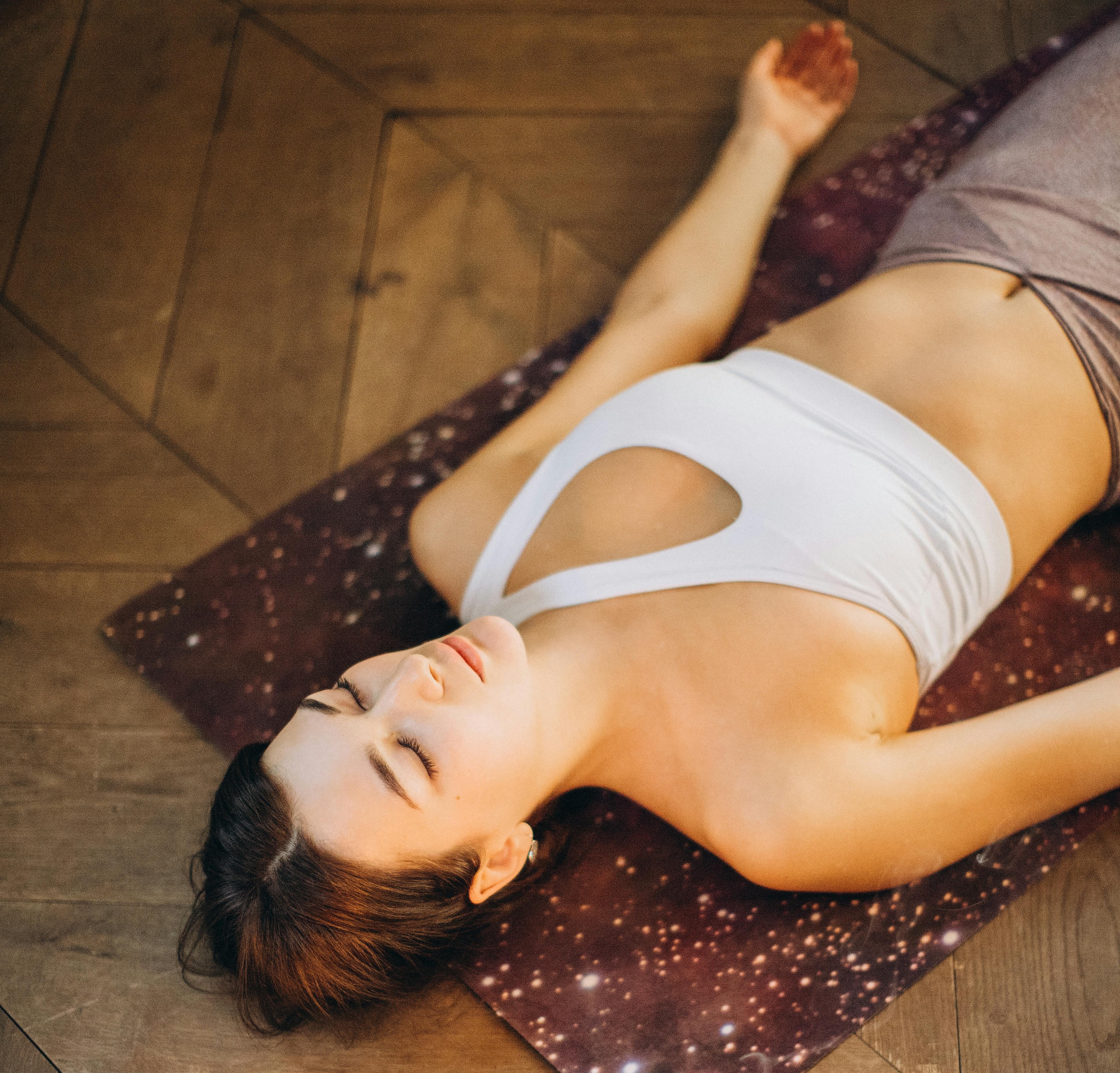
I’ve often heard, “Savasana is the easiest pose to get into, but the hardest pose to master.” Indeed, Corpse Pose in yoga seems so simple. You’re lying down on your back, closing your eyes, almost getting a mini-nap at the end of your yoga practice. But quieting the mind and coming to a place of stillness is incredibly challenging, which is why the above statement resonates with me so much.
Savasana is often the closing pose of a yoga practice, something I frequently tell my students is our “final resting posture”. It’s an opportunity to integrate all the benefits of the movement you’ve previously done in your practice, and to rest and leave your mat rejuvenated for what’s to come next in your day.
Sometimes I see students get off their mat and walk out of class as we’re beginning Savasana. I feel like they’re missing out, because Savasana is such an integral part of making a yoga practice more effective.
Whether you’re new to yoga or are a seasoned yogi, here are some tips and insights into Savasana to go deeper next time you take a class.
How to Practice Savasana
As my “Yoga Toolbox” states,
“At a symbolic level, the corpse represents the death of our limited beliefs, whose corresponding thoughts and feelings are dissolved along the Yoga journey. In Shavasana, we experience a complete release of all duality and suffering related to the limitations of the personality. Although this release is temporary, it serves to remind us of the possibility of complete freedom through spiritual awakening.”
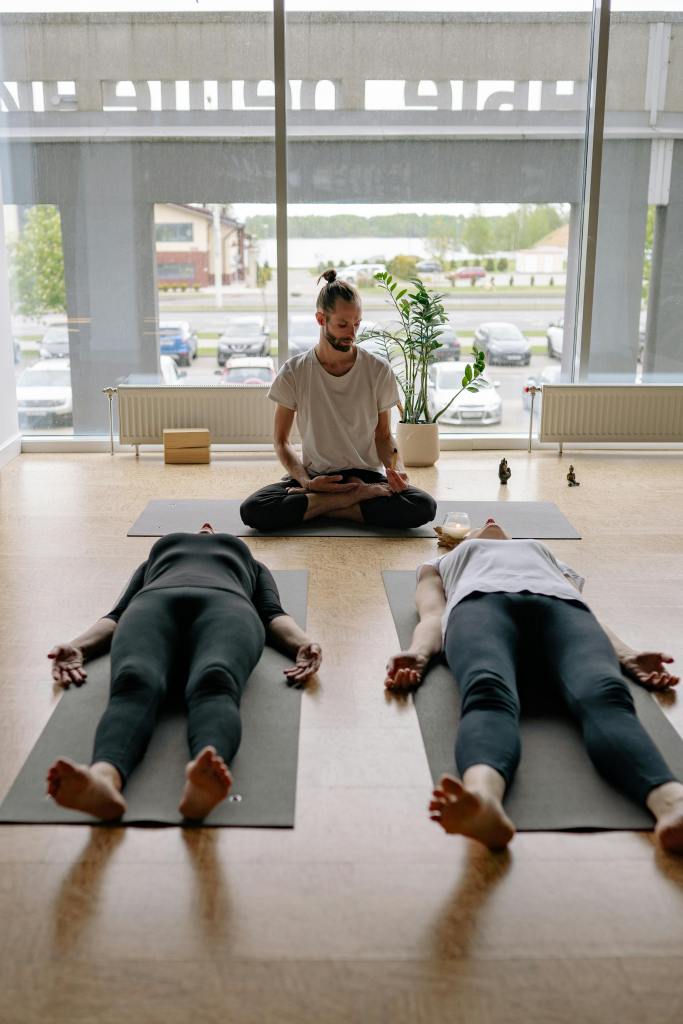
You can see from the above description how powerful this pose is! I try to provide students with around 5 minutes of Savasana in each of my 55-minute classes. To come into Savasana, follow these steps.
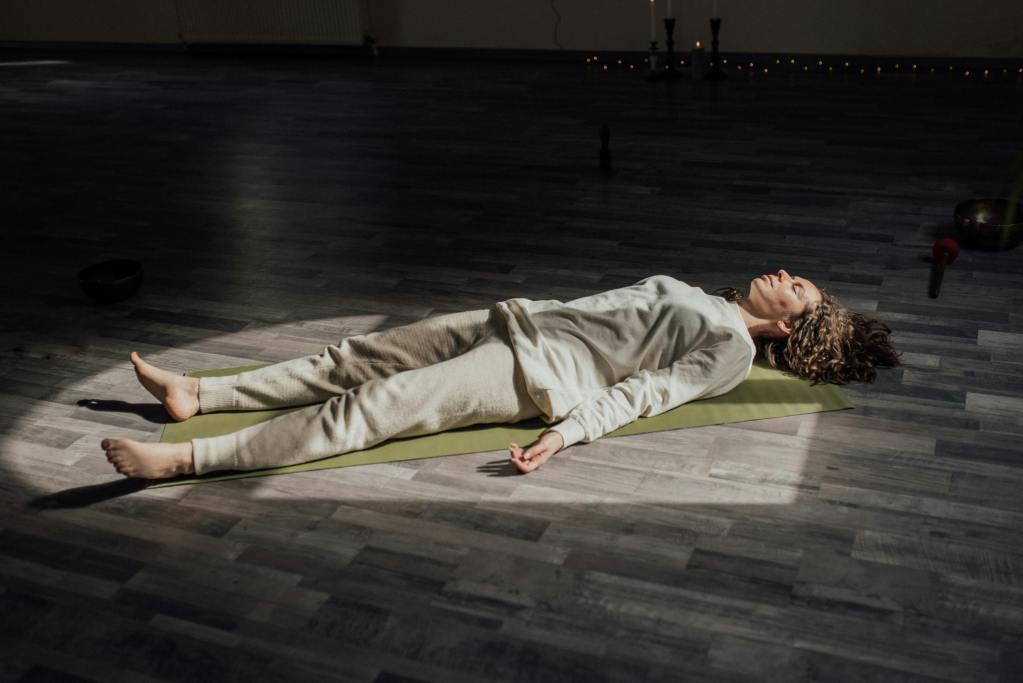
- Lie down on your back.
- Extend your legs long on the mat and your arms long down by your sides.
- Allow the palms of your hands to face up.
- Allow your feet to naturally fall out to the sides.
- Close your eyes.
- Try to focus on your third eye center, the space between your eyebrows.
- Try to quiet the mind. It’s OK if thoughts pop up. Notice them, and let them go.
During Savasana, I’ll usually walk around and offer some hands-on shoulder adjustments to remind students to relax a bit more into the pose. Sometimes, we may have a tendency to hunch up our shoulders or continue to carry tension into the pose. I walk around and gently rub my hands together over someone’s face to signal I’m there. Then, I’ll gently touch the person’s shoulders with an exhalation to remind them to let go. Students always have the option to opt out of this physical touch by placing a hand on their stomach to indicate they’d like to be skipped.
While the above guidelines are one way to enter Savasana, this pose is mostly about relaxing and integrating all the benefits of a practice. That means, if you’d rather lie on your side in the fetal position than on your back, go for it. If you want to bend your knees and have your feet flat on the ground, that’s OK, too. You could even bring the soles of the feet together and let the knees fall out into a Supine Butterfly. You can place your hands wherever you’d like, face-down on your mat, or a hand on your heart and one on your stomach.
Like any yoga pose, you’re free to make Savasana your own. The most important thing is to try to quiet the mind, to focus on the breath and to relax. Savasana can be a vulnerable pose for many people, so ease into it slowly if you’re new to yoga, and gradually find ways to go deeper into it with every practice.
As always, consult your physician before you begin a yoga practice. Talk with your doctor to ensure you’re safely entering every yoga pose, including lying down on your back in Savasana.
Benefits of Savasana
If you make your way to a yoga practice, I highly recommend you stick around for Savasana. This seemingly simple pose can be the most powerfully transformative of all. It’s worth including Savasana in your practice for the following benefits, according to the “Yoga Toolbox”.
- Savasana helps balance all your body’s systems, especially your digestive, endocrine and nervous systems.
- The calming nature of Savasana can have positive effects on stress and anxiety.
- Savasana helps yoga students practice stillness and deep relaxation.
You can practice Savasana at home by pairing it with a guided or instrumental meditation. Find a comfortable space to lie down, even if it’s not on a yoga mat, but on a bed or couch. With every breath, try to let go of any lingering tension. Feel yourself going deeper and becoming more relaxed as you breathe.
Why I Love Savasana
In today’s busy modern society, where we’re often running from one task to the next, Savasana gives us permission to come to stillness, even for a couple minutes. Something my yoga teacher often reminded students of was, “There’s nowhere to go, nothing to do.” Take the time in Savasana to savor this relaxation and remind yourself it’s OK to be still in this human life.
I agree that Savasana is extremely difficult to master. It’s a lifelong practice to quiet the mind and give yourself permission to fully rest. This is your reminder to take time for yourself in Savasana in your yoga practice. You deserve time to just be on your mat. Breathe in, and as you breathe out, feel yourself becoming more at peace.
Is there another yoga pose you’d like to learn more about? Leave a comment, or get in touch.


Leave a Reply