

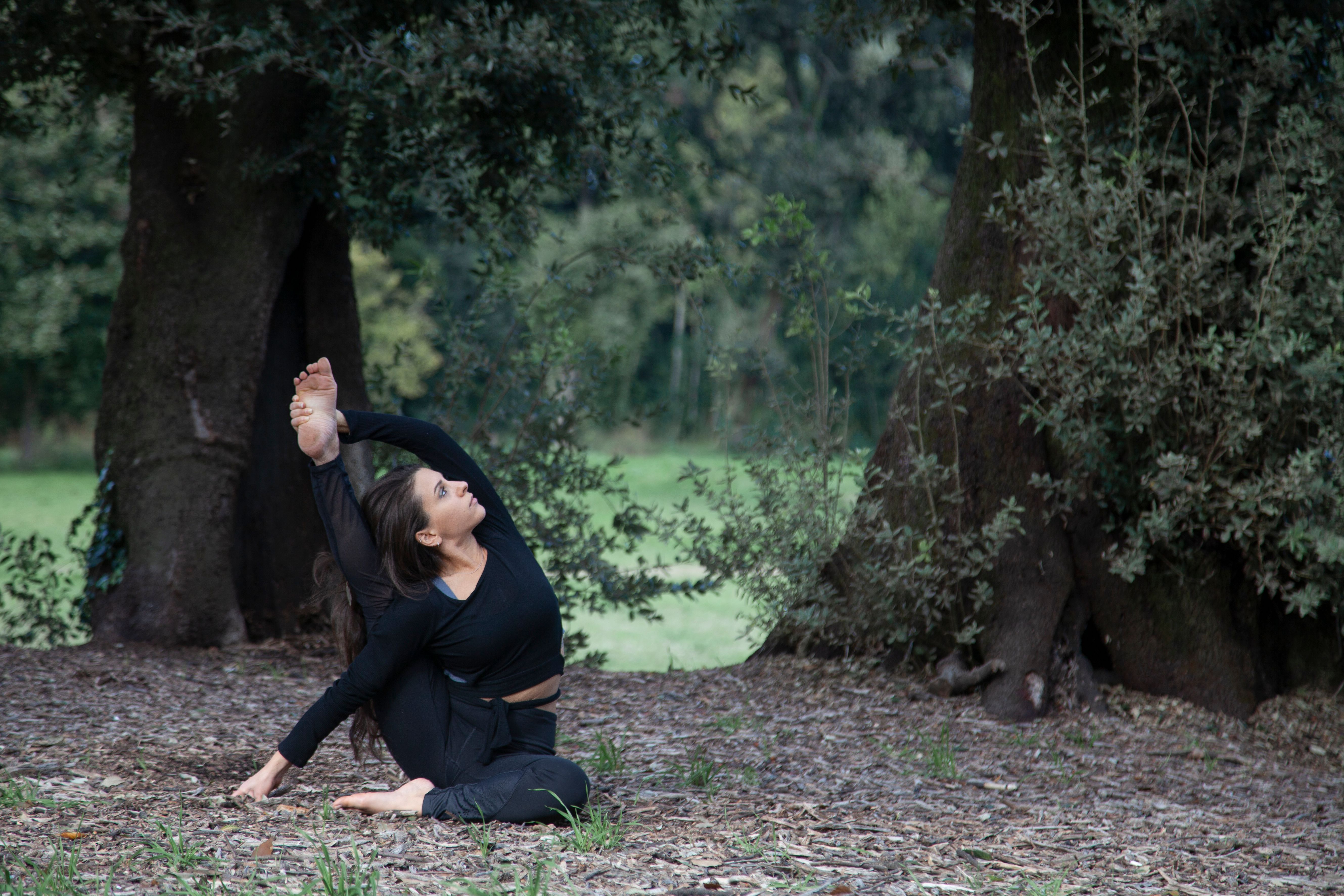
One of my favorite ways to describe what you can expect from yoga is “meditation in motion”. Yoga truly provides mind-body benefits. It’s more than moving your body into interesting and challenging shapes. A yoga practice can help quiet the mind, improve focus and make you feel more at peace with yourself.
If you’ve heard the term “movement meditation” to describe yoga and are curious about what this means, learn how yoga infuses elements of meditation as you move your body in physical postures (asanas).
First: What Is Meditation?
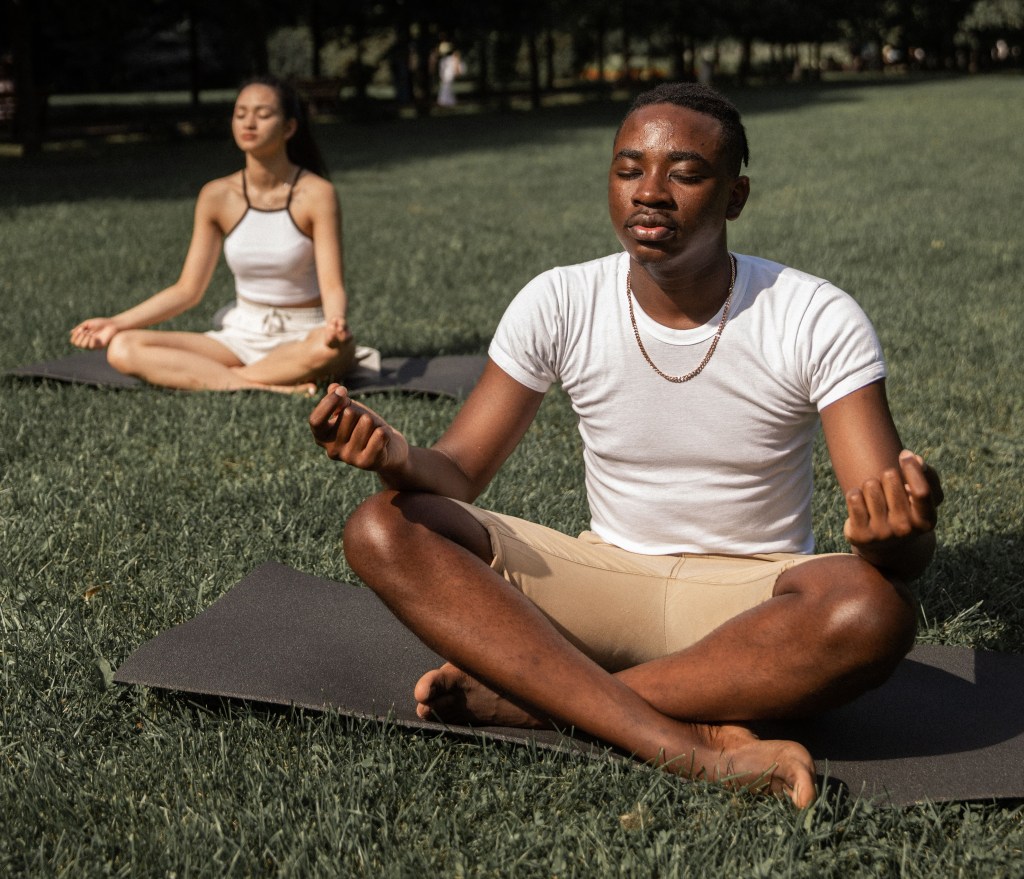
Meditation is primarily a mental state that focuses on achieving clarity and finding inner peace. Cornell University defines meditation as “the practice of training your mind to focus on one thing at a time, and to be fully present in the moment”. I like this definition, because it doesn’t limit meditation to closing your eyes and sitting in silence.
Meditation can be found in forms like:
- Listening to a guided audio meditation, where someone talks as you close your eyes
- Closing your eyes and listening to instrumental music, letting thoughts come and go, and coming back to focusing on the breath
- Sitting in complete silence, in a comfortable seat, focusing on your third eye center, that space between your brow bones
- Going for a quiet walk in nature, paying attention to the things you see and the natural sounds you hear
- Eating a meal in silence, paying attention to the tastes, smells and textures of every bite
We can become more meditative doing simple, repetitive tasks, like emptying the dishwasher or folding clothes, in a mindful state. In some meditative trainings, practitioners chop vegetables in silence, focusing solely on the task at hand and achieving a peaceful state while doing it.
You can meditate anywhere, without a need to close your eyes. You can sit in a doctor’s office waiting room, find a spot to focus on, and breathe as you’re waiting to be called. Instead of listening to the radio while you drive, turn it down, and see how much your focus on the road and those around you increases. Leave the earbuds at home next time you go for a walk around the block, and notice the bird calls and insects buzzing around you.
As you learn more about meditation, it’s easy to see how yoga and meditation go hand-in-hand. That’s why the practice of yoga is called meditation in motion, as you can try to focus solely on what’s on your mat in the moment.
Ways Yoga Is Meditation in Motion
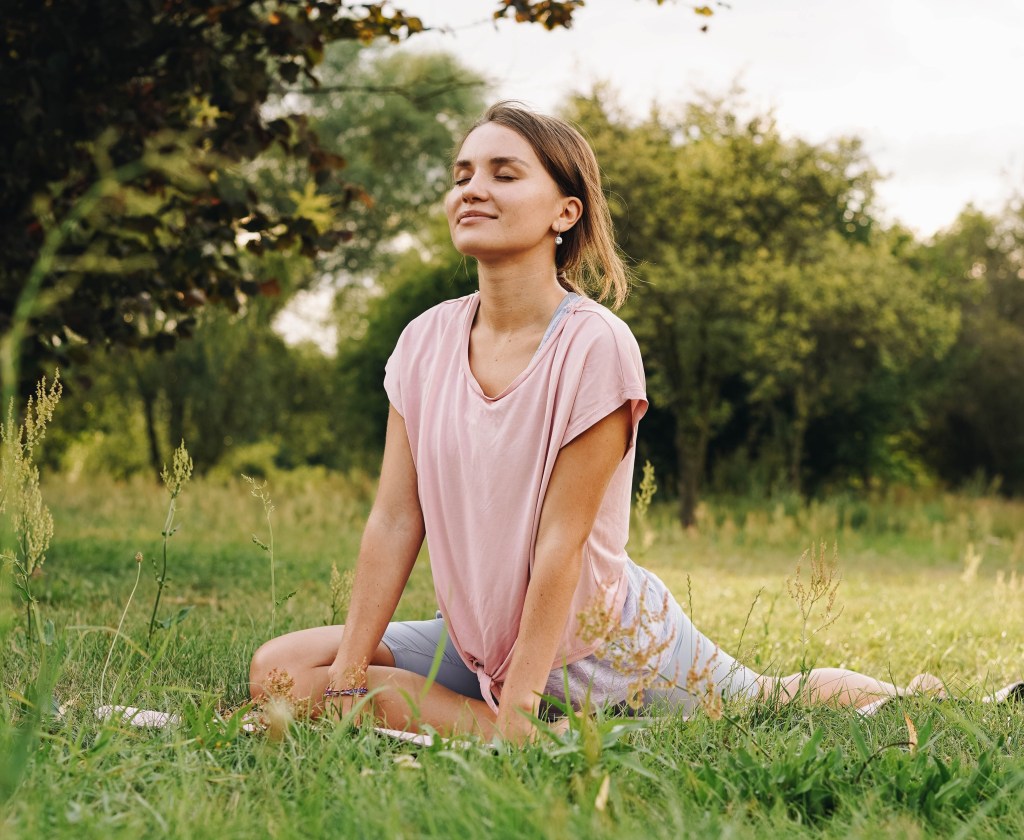
Just like you can transform mundane, everyday tasks into meditative action, you can turn your yoga practice into a movement meditation. Use these tips.
- Focus on your mat. Don’t let your mind wander to what other people are doing. Try to shift your focus and go inward, paying attention to what you’re doing on your own mat.
- Quiet the mind whenever you can. During moments of silence in your group yoga class or throughout your solo session, try to focus on being in your body, rather than paying attention to thoughts. It’s normal for the mind to think about things outside of yoga while you’re doing it. Acknowledge the thought, and like a cloud in the sky, let it pass by.
- Close your eyes. If you can do so safely, close your eyes during yoga whenever you feel comfortable. Prime times to do so are in Savasana (Corpse Pose) and in a beginning-of-the-class warmup. I also love closing my eyes in resting postures like Tadasana (Mountain Pose) and Child’s Pose (Balasana), and in lying-on-the-back postures, like Supine Spinal Twist (Supta Matsyendrasana). You can also close your eyes in more challenging poses, like Warrior I (Virabhadrasana I).
- Use your breath as a guide. Vinyasa flow classes are “one breath, one movement” type classes, where each movement is guided by an inhale or an exhale of breath. Even if you’re taking a different style class, like Hatha or Yin yoga, you can still turn to the breath as a point to focus on. Use your breath to help you go deeper into poses and stretches, using micromovements to find your yoga edge.
- Do everything with intent. Arrive to your yoga mat in a centered state of mind, and try to use intent to guide every movement. This will also help you improve safety during your practice, as well as help you to focus on what you’re doing on your mat.
You can also arrive to class 5 minutes early to sit or lie down on your mat in quiet and meditate, or stay for extra Savasana time, if the class allows.
The main tenet of making yoga a meditation is to stay in the present moment. Think of your yoga practice as a form of self-care, where you don’t need to worry about things outside of it. Use your yoga time to simply be in the present moment.
Benefits of Meditation
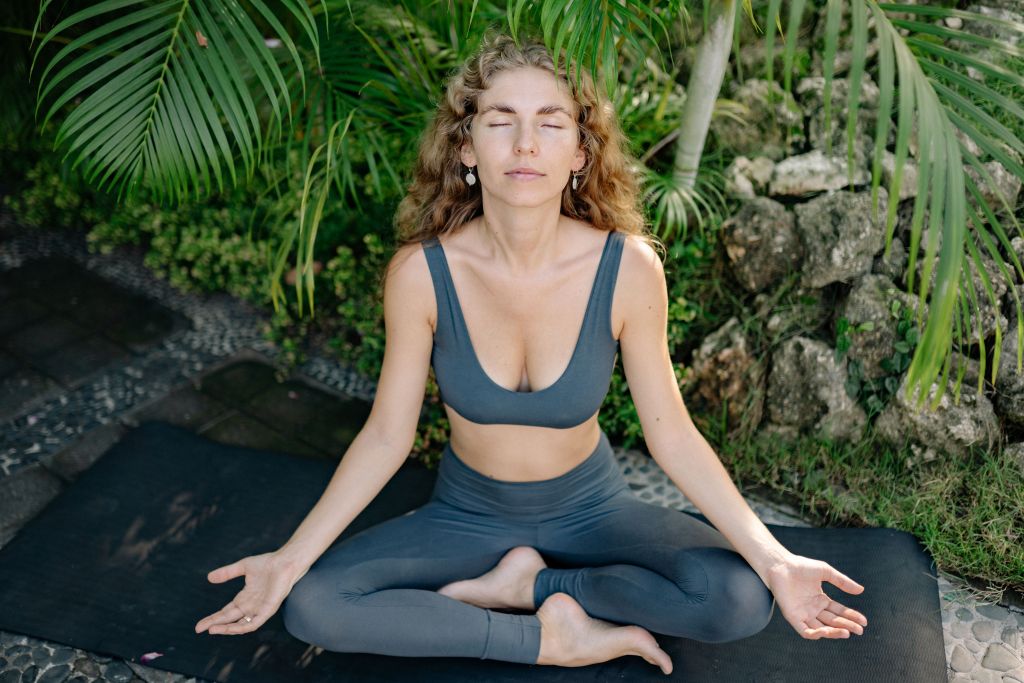
The Mayo Clinic calls meditation “a simple, fast way to reduce stress”. Integrating meditative practices into your life, including through a movement meditation practice like yoga, can have profound mental and physical health benefits. These include:
- According to Cleveland Clinic, meditation improves quality of life, helps treat anxiety and depression, lowers cortisol and stress levels, reduces pain for those with acute and chronic pain, and improves sleep.
- Mayo Clinic reports meditation reduces negative feelings, improves patience and lowers resting heart rate.
- According to UC Davis Health, meditation improves memory, increases attention, enhances willpower and increases compassion.
Every yoga class you take, you have the opportunity to practice meditation, as well. Whether it’s the 5 minutes in Savasana, or making a commitment to really be in the moment throughout your class, you can use a yoga practice to meditate, as well.
Sometimes we arrive to our yoga mats stressed and in a hurry to finish our classes. If you’re going to go to a yoga class in Alexandria or somewhere else, once you arrive to your mat, you may as well focus on what you’re doing.
I love the saying, “There’s nowhere to go, nothing to do,” in relation to taking a yoga class. All you have to do is be in the present moment and enjoy all the benefits this meditation in motion offers you.
Do You View Yoga as Meditative Movement?
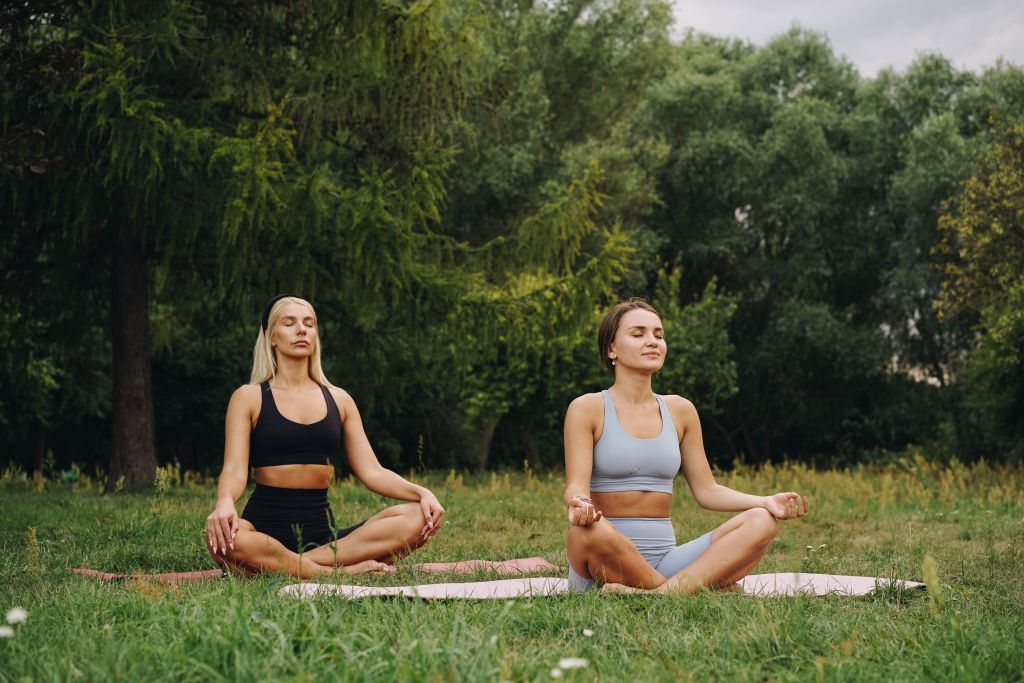
I’d love to hear from you! Do you think of your yoga practice as meditation in motion? How do you stay focused when you’re on your mat? Do you meditate outside of yoga?
Share your thoughts in the comments!
Have another topic you’d like me to write about on this Alexandria yoga blog? Message me.
About the author: Nicki Escudero is a journalist and RYT-200 yoga instructor certified by Yoga Alliance. She teaches group and private yoga classes in Alexandria, VA, and Washington, DC. Contact Nicki.


Leave a Reply